 #1
Science & Medicine
Marie-Rosalie Cadron-Jetté
1794–1864Holy midwife
6 Wikipedia and sister-site articlesWikipedia ↗
Each edition grades its towns against each other only.
The best known is the Holy midwife Marie-Rosalie Cadron-Jetté, with articles in 6 languages. Close behind are André Villeneuve and Louis Conrad Pelletier. More than half were born before Confederation, 8 in all. As early as 1794, Marie-Rosalie Cadron-Jetté was born here, one of 8 born before Confederation.
No other field is as far above the usual share as leaders, at 3.5 times.
For comparison, the usual town: how the people listed across Canadian towns split by field. Tap a field to list its people.
The 1850s saw the most births of any decade: 2.
Every person is a dot in the column of the decade they were born.
Two of the three are leaders.
#1Holy midwife
Canadian politician
 #3
Canadian lawyer and politician
6 more, best known first.


No one matches both filters.
Close by, L'Assomption counts 38 famous people, the most of its neighbours.
 L'Assomption · 11 kmSebastien Toutant & 37 more
 Verchères · 13 kmCalixa Lavallée & 24 more
 Contrecoeur · 6 kmJoseph Edmond Marcile & 8 moreNPSaint-Ours · 11 kmNarcisse Pérodeau & 8 moreGCSaint-Antoine-sur-Richelieu · 13 kmGeorge-Étienne Cartier & 8 more
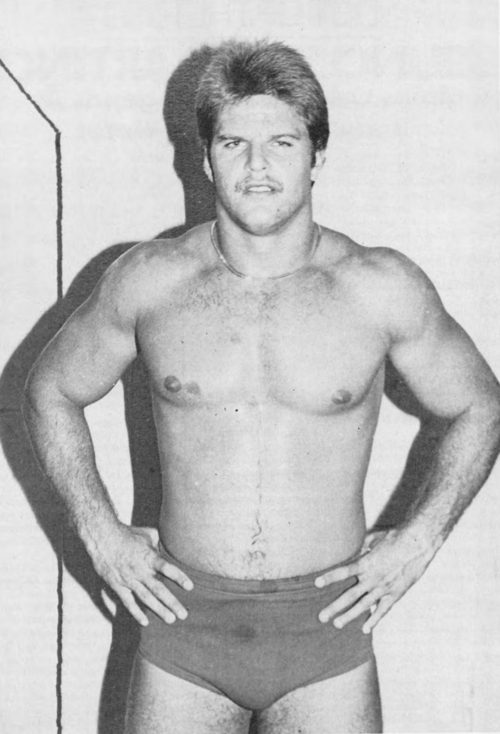 Saint-Sulpice · 8 kmJacques Rougeau & 7 more
 L'Épiphanie · 16 kmAntoine Dufour & 6 morePDSaint-Denis-sur-Richelieu · 15 kmPaul Dubé & 5 more
By our measure the best known is Marie-Rosalie Cadron-Jetté (holy midwife); the spotlight above gives the details. Next come André Villeneuve and Louis Conrad Pelletier.
Here the share is 78%; across Canadian towns it is 22%.
Marie-Rosalie Cadron-Jetté, from 1794; the most recent birth on the list is from 1961.
Two sources must agree: Wikidata, placing the birth inside Lavaltrie’s municipal boundary (Statistics Canada’s 2021 census subdivision) or one of its hospitals or districts, and the person’s English or French Wikipedia article. Moving here later is not enough, and adult performers and people known chiefly for crimes are not listed.
The likeliest reasons: a birthplace recorded only as a province or as Canada, a hamlet or rural area with no page of its own, or an article that gives another place or none. Fixing Wikidata or Wikipedia brings them onto the list at the next refresh, as long as the two then agree.
Birthplaces, descriptions, years, occupations and the count of Wikipedia and sister-site articles come from Wikidata (CC0). Each birthplace is checked against the person’s English Wikipedia article, or the French one where English says nothing or has no article; the articles are linked, never quoted. Wikidata’s Statistics Canada code, the place’s name or its point inside the 2021 census outline puts a birth in a town, and a birth given only as a split city stays on that city’s page. Fields are read from the description and occupations, and the list runs by number of articles. “The usual town” is everyone listed across Canadian towns. Portraits: each person’s Wikidata image, from Wikimedia Commons under the licence below (our copy, resized).
Adapted from Statistics Canada (Census of Population 2021, population estimates 2025, 2021 census boundaries) under the Statistics Canada Open Licence; this does not constitute an endorsement by Statistics Canada. Neighbourhood names in some cities © OpenStreetMap contributors (ODbL).