Church of St. Joseph, Carleton · Photo: Concierge.2C · CC BY-SA 3.0
3historic places on the registers
History of Carleton-sur-Mer · Canada’s heritage registers
The registers record 3 historic places in Carleton-sur-Mer
Carleton-sur-Mer’s 7.2 per 10,000 residents puts it ahead of 97% of Canadian towns. The oldest dated place, Church of St. Joseph, Carleton, goes back to 1850. On the list: 3 municipal citations.
Photos from Wikimedia Commons, each credited to its photographer with its licence; names open the place’s page. Tap a photo to step through them full screen.
Through time
Carleton-sur-Mer from 1900 to 1942
Set out by date: 4 old photographs of the town. Point at a dot for its year, or tap a picture to enlarge it.
1890190019101920193019401950Confederation to 1900Boom yearsThe wars and betweenAfter the war
Public domain or CC0, made before 1950, from Wikimedia Commons; old views of places can be drawings, prints or maps of their time. Each credit opens the image’s page.
How it began
Carleton-sur-Mer’s first recorded year: 2000
In Wikidata’s entry, the municipality of Carleton-sur-Mer dates from October 4, 2000; that can mean a founding, a charter or a merger. The name Carleton-Saint-Omer lasted until 2005, when Carleton-sur-Mer took another. In 2000 the municipality took over from Carleton and Saint-Omer.
Every place on the registers inside the town, by its designation.
Provincial and local listings
Hover a dot for its name; tap one to open its page.
The 3, by tier
3 Provincial and local listings
Federal designations come from Parks Canada; Québec’s own register adds what the province has classified and what the municipality has cited.
Points from Wikidata (Parks Canada’s files carry none) and from Québec’s register, as mapped there.
Provincial and local listings
On provincial and local lists in Carleton-sur-Mer: 3 places
The first was designated in 2003, the latest in 2008. Citations the municipality has made, registered with Québec’s ministry of culture. “Church of St. Joseph, Carleton” and Site du Mont-Saint-Joseph lead the list. Each one opens its own page.
26% of Carleton-sur-Mer’s homes are older than 1961, against a usual 18%
Over half of the homes in Carleton-sur-Mer were already standing by 1981. The largest single period is from 1961 to 1980, with 31% of Carleton-sur-Mer’s homes. New building in Carleton-sur-Mer runs at the usual pace: 4.2% of homes from 2016–21, the typical town 4.1%.
26%
Before 1961
31%
1961–80
26%
1981–2000
13%
2001–15
4.2%
2016–21
Carleton-sur-MerTypical town
2021 Census, private dwellings by period of construction (Statistics Canada); the typical town is the middle Canadian town of 2,500 or more.
Born here
Carleton-sur-Mer’s person of national historic significance, and others
4 of the 8 were born in the years before Confederation. The widest known is Joseph-Guillaume Barthe: 4 Wikipedia editions. At the other end is Philibert LeBlanc, from 1890. Of them all, William Henry Clapperton lived longest: 83 years, until 1922.
Joseph-Rémi Vallières de Saint-Réal
Joseph-Guillaume Barthe
William Henry Clapperton
Joseph-Théophile Allard
Henri Diotte
Valmont Martin
Arthur Beauchesne
Philibert LeBlanc
175017751800182518501875190019251950
JB
Joseph-Guillaume Barthe1816–1893 · Canadian politician
Valmont Martin1875–1935 · Canadian politician
JS
Joseph-Rémi Vallières de Saint-Réal1787–1847 · Canadian politician
HD
Henri Diotte1874– · Canadian politician
William Henry Clapperton1839–1922 · Canadian politician
Joseph-Théophile Allard1842–1912 · Canadian catholic priest
Arthur Beauchesne1876–1959 · Person of national historic significance (2003) · Canadian civil serv…
PL
Philibert LeBlanc1890–1964 · Canadian politician
Everyone born in Carleton-sur-Mer → Born before 1914. Birthplaces from Wikidata, each checked against Wikipedia; national historic persons from Parks Canada’s Directory of Federal Heritage Designations, matched by name and life years.
Towns its size
Carleton-sur-Mer has the most of 16 towns its size
Towns of 4,200 to 4,200 residents, by places on the registers.
In Carleton-sur-Mer, 26% of homes were built before 1961, against 18% in the typical town. In all there are 3 historic places. It tops the 16 towns nearest its size for historic places. Joseph-Guillaume Barthe (1816), Valmont Martin (1875) and Joseph-Rémi Vallières de Saint-Réal (1787) are the best known of its historic lives. For the rest, its places were designated between 2003 and 2008.
How to read these numbers
What this data can and can’t tell you
•
People and events. Parks Canada’s open file gives its national historic persons no place. A town’s page names one only when the person was born there (matched by name and both life years) or one of its own historic places carries the name and its record speaks of them; national historic events stay off.
•
Protection. Québec’s classements and citations carry legal protection: work on a classified building needs the minister’s authorization, on a cited one the municipality’s. Federal designations commemorate.
•
Québec’s register. Québec is the one province whose register is open: classements, declarations and municipal citations, described by the ministry in French.
•
The federal register. Every federal designation is in Parks Canada’s directory, and the Canadian Register of Historic Places gives most of them a bilingual statement of significance.
•
The grade. History isn’t one of Canada’s graded pillars, so this page describes and compares without a letter.
•
The tiers. National Historic Sites and the most protected buildings form the top tier; recognized federal buildings, stations and lighthouses the second; provincial and municipal listings the third.
Questions about Carleton-sur-Mer’s history
How many historic places does Carleton-sur-Mer have on the registers?
The registers list 3 historic places inside Carleton-sur-Mer.
What is the oldest building in Carleton-sur-Mer?
Church of St. Joseph, Carleton, a Municipal citation (Québec), begun in 1850.
How old are the homes in Carleton-sur-Mer?
The 2021 Census dates 26% of its homes before 1961 (18% in the typical town).
Contains information licensed under the Open Government Licence – Canada (Parks Canada). Québec register data: Ministère de la Culture et des Communications du Québec, CC BY 4.0.
Sources: Parks Canada, Directory of Federal Heritage Designations · Canadian Register of Historic Places (federal extract) · Répertoire du patrimoine culturel du Québec (MCC, Données Québec) · Wikidata (CC0) for map points, other names and articles · Statistics Canada, 2021 Census (homes by period of construction). Under the Statistics Canada Open Licence.


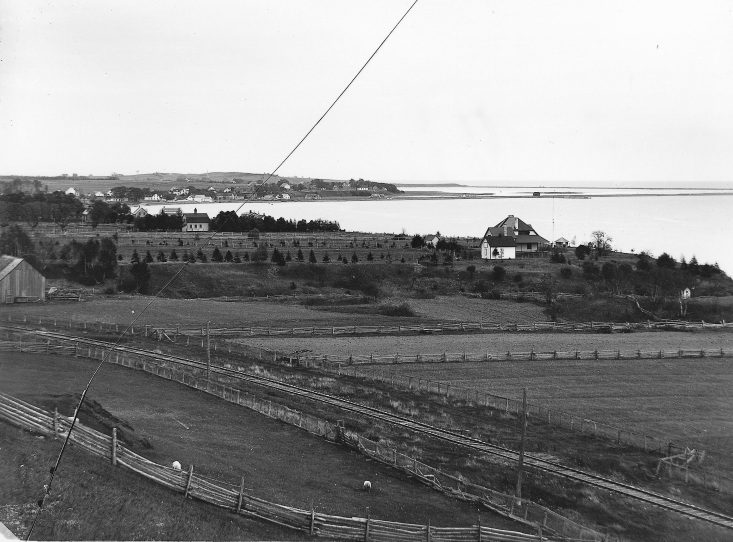 c. 1900
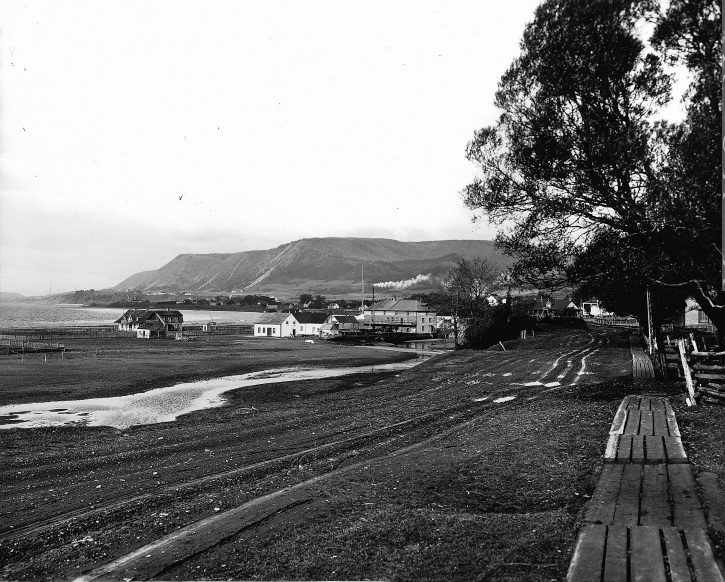 c. 1900
 c. 1910
 1942
 Local
 Local


