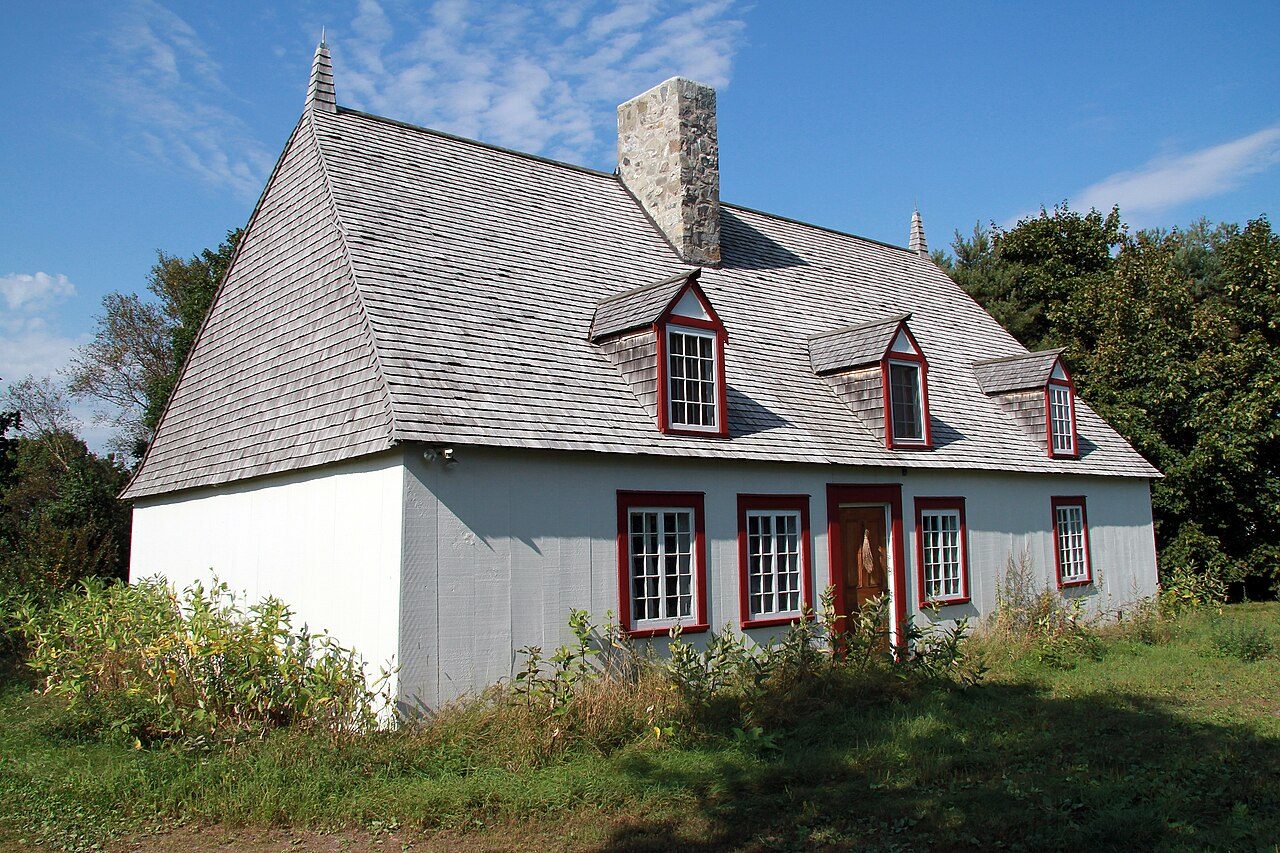
Maison Molleur-Dit-Lallemand · Photo: Malimage · CC BY-SA 3.0
7historic places on the registers
History of Beaumont · Canada’s heritage registers
Beaumont’s record starts in 1720 with Maison Molleur-Dit-Lallemand
The registers put 7 historic places inside Beaumont’s boundary, 5 of them of the highest rank. Per resident it outdoes 99% of Canadian towns, with 22 for every 10,000 people. The record has 2 municipal citations.
National Historic Sites, classified federal buildings and Québec’s classements
Provincial and local listings
2
municipal citations on Québec’s register
Oldest building
1720
the first construction date on its record
Homes built before 1961
17%
typical town: 18%
In pictures
4 of Beaumont’s 5 highest-designated places, photographed
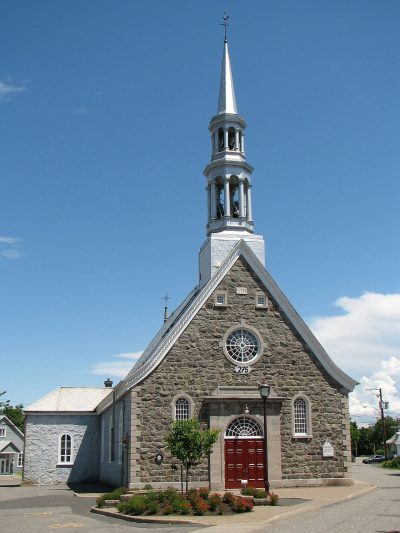
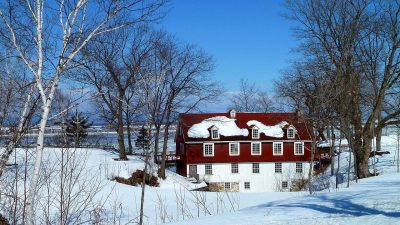
6 of the places on Beaumont’s heritage registers are pictured here; the others keep their register record. Among Beaumont’s top-tier places, 4 are pictured. Up first are Maison Molleur-Dit-Lallemand and Church of St Stephen.
Photos from Wikimedia Commons, each credited to its photographer with its licence; names open the place’s page. Tap a photo to step through them full screen.
Through time
Old pictures of Beaumont
A single old picture: the oldest view of one of its historic places. Tap the picture to enlarge it.
Public domain or CC0, made before 1950, from Wikimedia Commons; old views of places can be drawings, prints or maps of their time. Each credit opens the image’s page.
How old
In Beaumont, the years of New France left the most behind
Each place by the first construction date on its record.
New France before 17603
British North America 1760–18661
After Confederation 1867–19130
Wars and Depression 1914–19451
Since 1946 1946 on0
Of the 5 with a date, 4 predate 1867.
How it began
Back to 1855: Beaumont’s first record
The name Saint-Étienne-de-Beaumont lasted until 1998, when Beaumont took another. The municipality of Beaumont has the date July 1, 1855 on Wikidata; the record doesn’t say whether it marks a founding or an incorporation.
Every place on the registers inside the town, by its designation.
Highest designationsProvincial and local listings
Hover a dot for its name; tap one to open its page.
The 7, by tier
5 Highest designations2 Provincial and local listings
Federal designations come from Parks Canada; Québec’s own register adds what the province has classified and what the municipality has cited.
Points from Wikidata (Parks Canada’s files carry none) and from Québec’s register, as mapped there.
Highest designations
5 places in Beaumont with the highest designation
They were designated between 1979 and 2023. National Historic Sites and Classified Federal Heritage Buildings, Canada’s highest federal recognition. Maison Molleur-Dit-Lallemand is the earliest, from 1720; the latest dates from 1914. Each one opens its own page.
Beaumont’s record leans to churches and religious buildings: 43%
All told, 4 kinds of place appear. The second-largest group is houses, with 2. Leading by designation: Maison Molleur-Dit-Lallemand and Church of St Stephen.
Churches and religious buildings3
Houses2
Mills, shops and works1
Forts and military buildings1
Grouped by what each register says the place is or was; a converted building counts as what it was built for.
Provincial and local listings
On provincial and local lists in Beaumont: 2 places
Among them: Site du patrimoine du Village-de-Beaumont and Site patrimonial du Moulin-de-Beaumont. Citations the municipality has made, registered with Québec’s ministry of culture. Designations came from 1997 to 2008. Each one opens its own page.
A growing town: 8% of Beaumont’s homes went up from 2016 to 2021, against 4.1%
Before 1961: 17% of Beaumont’s homes, near the usual 18%. The busiest building years in Beaumont were from 1961 to 1980, which account for 27% of today’s homes. Homes built from 2001 to 2015 make up 24% of Beaumont’s, against 15% in the typical town.
17%
Before 1961
27%
1961–80
25%
1981–2000
24%
2001–15
8%
2016–21
BeaumontTypical town
2021 Census, private dwellings by period of construction (Statistics Canada); the typical town is the middle Canadian town of 2,500 or more.
Born here
1698 to 1910: the people Beaumont gave its past
Best known is Marie-Élisabeth Turgeon, with articles in 9 Wikipedia languages. The years before Confederation gave 4 of the 7. Wikidata and Wikipedia agree on 7 births here before 1914. At 91, Joseph-Aurélien Roy outlived the rest, dying in 2001.
Joseph Nadeau
Joseph Turgeon
Louis Turgeon
Étienne-Ferréol Roy
Marie-Élisabeth Turgeon
Adélard Turgeon
Joseph-Aurélien Roy
1650170017501800185019001950
Marie-Élisabeth Turgeon1840–1881 · Canadian nun
Adélard Turgeon1863–1930 · Canadian politician
JR
Joseph-Aurélien Roy1910–2001 · Canadian politician
LT
Louis Turgeon1762–1827 · Canadian politician
ÉR
Étienne-Ferréol Roy1771–1852 · Canadian politician
JN
Joseph Nadeau1698–1760 · French military personnel
JT
Joseph Turgeon1751–1831 · Canadian politician
Everyone born in Beaumont → Born before 1914 (the page’s periods: Confederation to the First World War). Birthplaces from Wikidata, each checked against the person’s Wikipedia article.
Towns its size
Beaumont has the most of 16 towns its size
Towns of 3,200 to 3,200 residents, by places on the registers.
Inside Beaumont there are 7 historic places, 5 with the highest designation, led by Maison Molleur-Dit-Lallemand. Among the 16 towns nearest its size, none has more historic places. Of the 5 with a date, 3 come from the years of New France.
Its people of the past include Marie-Élisabeth Turgeon (1840), Adélard Turgeon (1863) and Joseph-Aurélien Roy (1910). Before 1961: just 17% of its homes, against 18% in the typical town. Otherwise the figures are ordinary: the designations ran from 1979 to 2023.
How to read these numbers
What this data can and can’t tell you
•
The tiers. The highest designations are National Historic Sites, Classified Federal Heritage Buildings and Québec’s classements; then come the other federal designations; then provincial and local listings.
•
People and events. Persons of national historic significance come with no location; a town gets one only by birthplace (name and both life years agreeing) or by one of its own places that bears the name and whose record tells the story. Events, which can’t be tied, are left out.
•
Protection. A place classified or cited under Québec’s law is protected; National Historic Site status alone protects only what the federal government owns.
•
The grade. This page gives no grade; history doesn’t count toward a Canadian town’s letter.
•
The federal register. Federal places come from Parks Canada’s directory, which counts National Historic Sites, federal heritage buildings, stations and lighthouses; their statements are the register’s own.
•
Québec’s register. Québec is the one province whose register is open: classements, declarations and municipal citations, described by the ministry in French.
Questions about Beaumont’s history
What is the oldest building in Beaumont?
Maison Molleur-Dit-Lallemand — its record dates it to 1720 (Classified heritage building (Québec)).
Which places in Beaumont have the highest designation?
These: Maison Molleur-Dit-Lallemand, Church of St Stephen, Chapelle de procession de la Sainte-Vierge, Chapelle de procession Sainte-Anne and Vestiges du fort de Beaumont.
How old are the homes in Beaumont?
Before 1961: 17% of its homes; the typical town has 18%.
Contains information licensed under the Open Government Licence – Canada (Parks Canada). Québec register data: Ministère de la Culture et des Communications du Québec, CC BY 4.0.
Sources: Parks Canada, Directory of Federal Heritage Designations · Canadian Register of Historic Places (federal extract) · Répertoire du patrimoine culturel du Québec (MCC, Données Québec) · Wikidata (CC0) for map points, other names and articles · Statistics Canada, 2021 Census (homes by period of construction). Under the Statistics Canada Open Licence.


 c. 1900
 Top
 Top
 Top
 Top
 Local
 Local

