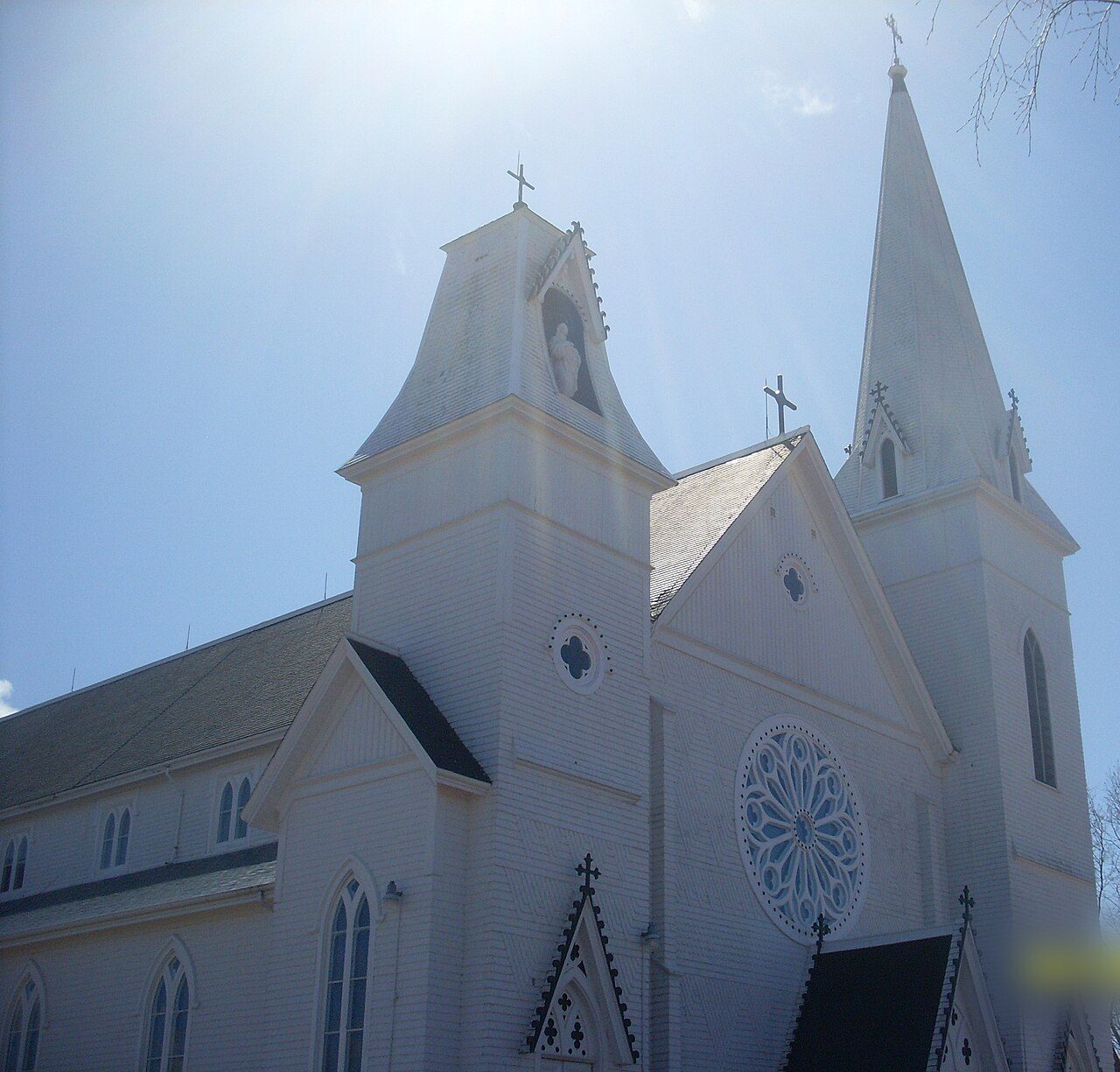
 Immaculate Conception Church · Photo: C RAZY `( lN )` S ANE ` · Public domain
Canada’s registers list 2 historic places in Tignish
The oldest building on Tignish’s record is North Cape Light, from 1861. The list takes in 2 provincial or municipal listings. A further 2 sit a short way past the edge of town. Local registers add 2 more places, counted here but not paged: Wikidata holds their numbers and little else.
Look around Tignish: 2 photos
Photos show both of the places Tignish’s registers name. Leading off: Immaculate Conception Church and North Cape Light.
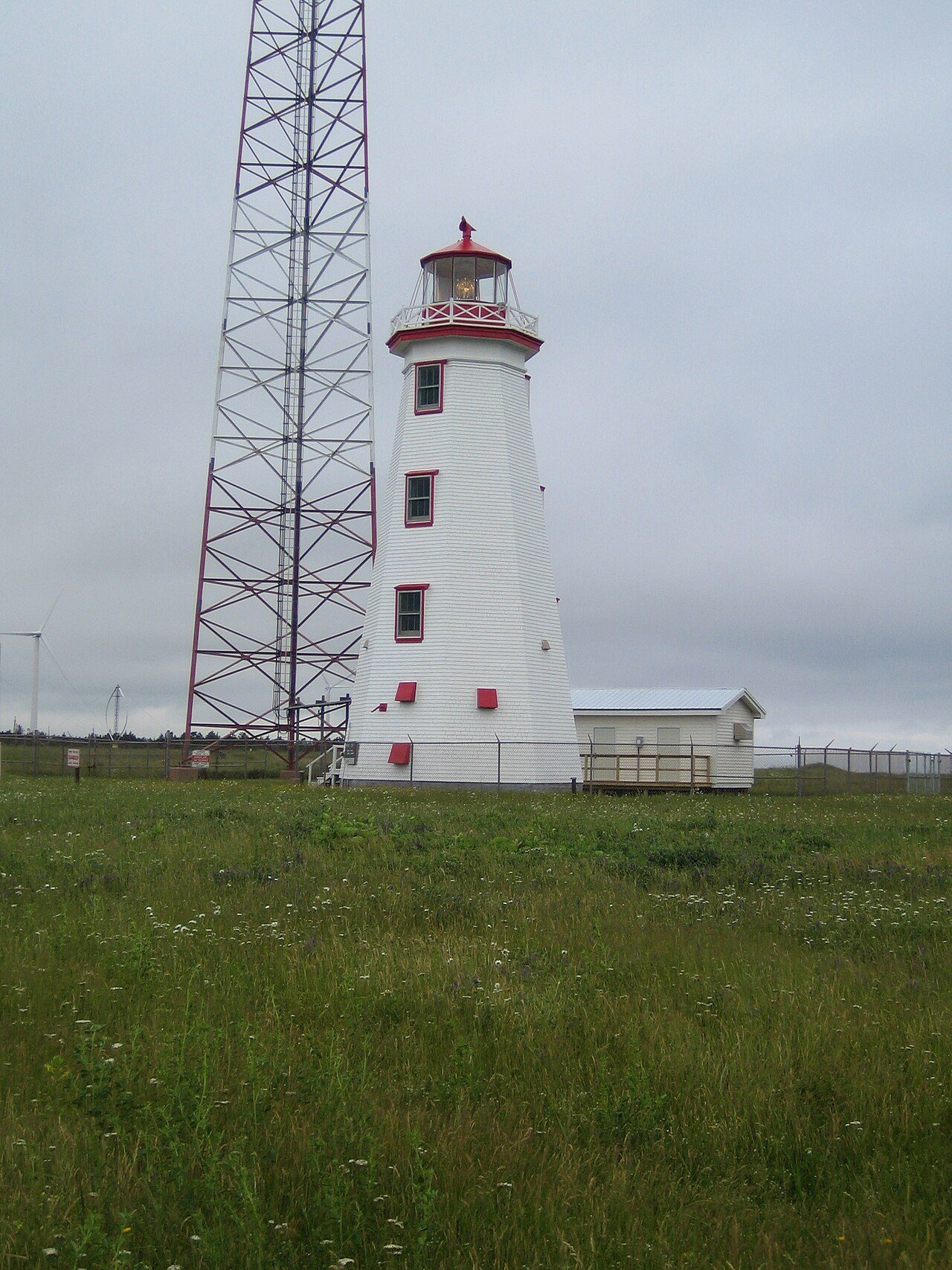
Photos from Wikimedia Commons, each credited to its photographer with its licence; names open the place’s page. Tap a photo to step through them full screen.
Where Tignish’s history is
Every place on the registers inside the town, by its designation.
Names show on hover, and a tap takes you to the place’s page.
Parks Canada’s Directory of Federal Heritage Designations lists the places the Government of Canada has recognized; outside Québec, provincial and municipal listings come only through Wikidata, and only those with an encyclopedia article get a page.
Points from Wikidata (Parks Canada’s files carry none) and from Québec’s register, as mapped there.
2 more places Tignish or its province protects
Provincial and municipal listings that Wikidata records and an encyclopedia describes. They include North Cape Light and Immaculate Conception Church. Each one opens its own page.
 Local
 Local
One place of national importance within 25 km of Tignish
They are 2 provincial or municipal listings, a National Historic Site and a heritage lighthouse. Oldest of them is Alberton Court House (1877), 19 km off. Nearest comes Holy Trinity Anglican Church, 14 km off, in Alberton.
The 4 nearest, within 25 km
| Holy Trinity Anglican ChurchRegistered Heritage Place · 1890 · 14 km away, in Alberton |
| Alberton Railway StationDesignated heritage place · 19 km away, in Alberton |
| Alberton Court HouseNational Historic Site · 1877–1879 · 19 km away, in Alberton |
| Northport Rear Range LighthouseHeritage Lighthouse · 1885 · 21 km away, in Alberton |
Just outside Tignish: 2
| Convent of Notre Dame-des-AngesRegistered Heritage Place · 600 m outside the town |
| St. Simon & St. Jude ChurchRegistered Heritage Place · 600 m outside the town |
Tignish is still building: 8.6% of homes date from 2016 to 2021, against 4.1%
17% of Tignish’s homes predate 1961, close to the typical town’s 18%. More of Tignish’s homes were built from 1981 to 2000 than in any other period: 33%. Half of the homes standing in Tignish today were built before 2001.
2021 Census, private dwellings by period of construction (Statistics Canada); the typical town is the middle Canadian town of 2,500 or more.
Born in Tignish before the First World War: 4 lives
The widest known is Peter Adolphus McIntyre: 5 Wikipedia editions. At the other end is Joseph Alphonsus Bernard, from 1881. In 1840 came the earliest, Edward Hackett. Of them all, Charles Dalton lived longest: 83 years, until 1933.
Everyone born in Tignish → Born before 1914 (the page’s periods: Confederation to the First World War). Birthplaces from Wikidata, each checked against the person’s Wikipedia article.
Tignish and its neighbours
| Town | People | Places | Highest | Oldest |
|---|---|---|---|---|
| Tignish | 2,041 | 2 | 0 | 1861 |
| Miminegash | 1,166 | 0 | 0 | — |
| Alberton | 1,498 | 2 | 1 | 1877 |
Tignish in brief
Canada’s heritage lists give Tignish 2 historic places. Peter Adolphus McIntyre (1840), Charles Dalton (1850) and Edward Hackett (1840) lead its people of the past. Few of its homes are old, 17% before 1961, against 18% in the typical town.
What this data can and can’t tell you
- People and events. Persons of national historic significance come with no location; a town gets one only by birthplace (name and both life years agreeing) or by one of its own places that bears the name and whose record tells the story. Events, which can’t be tied, are left out.
- The federal register. Federal places come from Parks Canada’s directory, which counts National Historic Sites, federal heritage buildings, stations and lighthouses; their statements are the register’s own.
- Map points. Where a federal place sits on the map is Wikidata’s placing; the directory itself has no coordinates.
- The grade. History isn’t one of Canada’s graded pillars, so this page describes and compares without a letter.
- Protection. A National Historic Site designation recognises significance; it doesn’t by itself protect a building the federal government doesn’t own. Legal protection comes from provincial and municipal designations, whose own registers aren’t open data outside Québec.
- Provincial and municipal lists. Outside Québec, provinces’ and municipalities’ heritage registers aren’t open data; their places are known only through Wikidata items with a register number, and only those with an encyclopedia article get a page.
- The tiers. National Historic Sites and the most protected buildings form the top tier; recognized federal buildings, stations and lighthouses the second; provincial and municipal listings the third.
Questions about Tignish’s history
How many historic places does Tignish have on the registers?
Inside Tignish: 2 historic places.
What is the oldest building in Tignish?
By its record, North Cape Light, from 1861 (Designated heritage place).
Why might a heritage building in Tignish be missing here?
Provincial and municipal registers outside Québec aren’t open data. Wikidata knows 2 more listings in Tignish, but without an open description or an encyclopedia article they get no page.
How old are the homes in Tignish?
Before 1961: 17% of its homes; the typical town has 18%.
Contains information licensed under the Open Government Licence – Canada (Parks Canada).
Sources: Parks Canada, Directory of Federal Heritage Designations · Canadian Register of Historic Places (federal extract) · Wikidata (CC0) for map points, other names and articles · Statistics Canada, 2021 Census (homes by period of construction). Under the Statistics Canada Open Licence.
Adapted from Statistics Canada (Census of Population 2021, population estimates 2025, 2021 census boundaries) under the Statistics Canada Open Licence; this does not constitute an endorsement by Statistics Canada. Neighbourhood names in some cities © OpenStreetMap contributors (ODbL).