

 Top
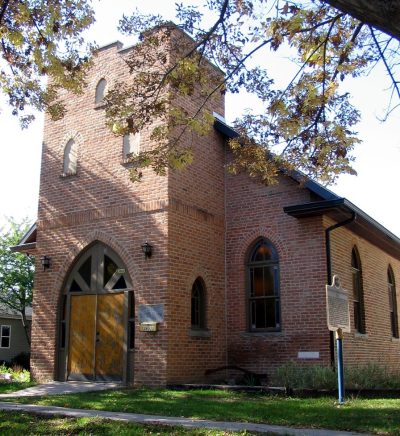
National Historic Site · 1851–1852Sandwich First Baptist Church3652 Peter StreetPhoto: jodelli · CC BY 2.0 · Commons file
 Essex County Court House · Photo: Crisco 1492 · CC BY-SA 4.0
4historic places on the registers
History of Sandwich · Canada’s heritage registers
Back to 1798 in Sandwich, with Duff Baby House
The typical town has 18% of its homes from before 1961; Sandwich has 43%. All told the heritage lists hold 4 historic places within the town, and one sits in the top tier. Scaled to its population, 2.8 per 10,000 residents beats 89% of Canadian towns. Counted by designation, there are 3 provincial or municipal listings.
Historic places
4
2.8 per 10,000 residents
Highest designations
1
National Historic Sites and Classified Federal Heritage Buildings
Provincial and local listings
3
provincial and municipal listings with an encyclopedia article
Oldest building
1798
the first construction date on its record
Homes built before 1961
43%
typical town: 18%
In pictures
Sandwich now and then, in 4 photos and 1 old views
Photos show every place Sandwich’s registers name. Look out for Sandwich First Baptist Church and Essex County Court House. 4 different photographers shared them on Wikimedia Commons.
Photos from Wikimedia Commons, each credited to its photographer with its licence; names open the place’s page. Tap a photo to step through them full screen.
Through time
Looking back at Sandwich
From before 1950 comes the oldest view of one of its historic places. Tap it to see it full screen.
 c. 1840
Public domain or CC0, made before 1950, from Wikimedia Commons; old views of places can be drawings, prints or maps of their time. Each credit opens the image’s page.
The map
Where Sandwich’s history is
Every place on the registers inside the town, by its designation.
Highest designationsProvincial and local listings
Dots open their places’ pages; hover first to read the name.
The 4, by tier
1 Highest designations3 Provincial and local listings
Federal designations come from Parks Canada’s directory; a province’s or a council’s own listing shows here only when Wikidata holds it and an encyclopedia covers it.
Points from Wikidata (Parks Canada’s files carry none) and from Québec’s register, as mapped there.
Highest designations
Sandwich’s top designation
National Historic Sites and Classified Federal Heritage Buildings, Canada’s highest federal recognition. Each one opens its own page.
Provincial and local listings
3 local listings in Sandwich
Provincial and municipal listings that Wikidata records and an encyclopedia describes. They date from 1798 (Duff Baby House) to 1880. Each one opens its own page.
 Local
 Local
Designated heritage property (part IV) · 1855Essex County Court HousePhoto: Crisco 1492 · CC BY-SA 4.0 · Commons file
 Local
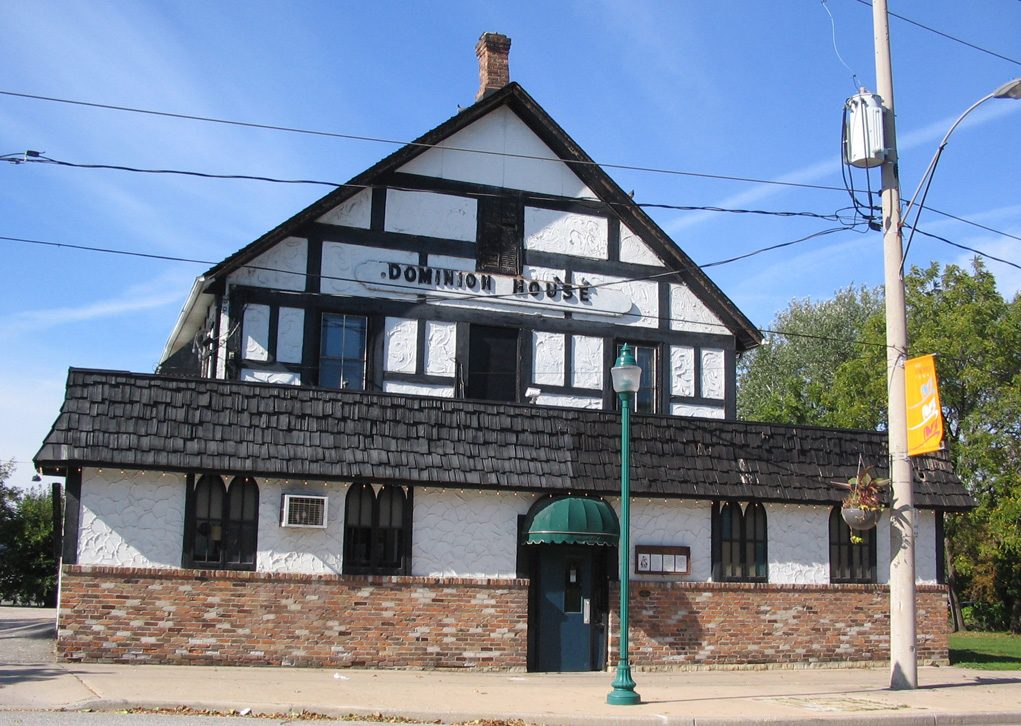
Designated heritage property (part IV) · 1880Dominion HousePhoto: Ojleslie · CC BY-SA 3.0 · Commons file
Homes by age
Only 2.1% of Sandwich’s homes were built from 2016 to 2021 (4.1% is typical)
Homes built from 1981 to 2000 make up just 17% of Sandwich’s, against 23% in the typical town. Only 5.7% of Sandwich’s homes were built from 2001 to 2015, less than the typical town’s 15%. Half of the homes standing in Sandwich today were built before 1981.
43%
Before 1961
30%
1961–80
17%
1981–2000
5.7%
2001–15
2.1%
2016–21
SandwichTypical town
2021 Census, private dwellings by period of construction (Statistics Canada); the typical town is the middle Canadian town of 2,500 or more.
Towns its size
Sandwich has the 2nd most of 16 towns its size
Towns of 14,000 to 14,200 residents, by places on the registers.
Sandwich4
Ahead of it: Rosemère. The middle one has 0. 10 of them have nothing on the registers.
Neighbours
Sandwich and its neighbours
| Town | People | Places | Highest | Oldest |
|---|---|---|---|---|
| Sandwich | 14,110 | 4 | 1 | 1798 |
| River West | 13,940 | 1 | 0 | 1846 |
| South Cameron | 11,804 | 0 | 0 | — |
| South Central | 10,392 | 0 | 0 | — |
| City Centre | 10,269 | 2 | 1 | 1811 |
| South Windsor | 15,896 | 0 | 0 | — |
| Walkerville | 19,541 | 1 | 0 | 1906 |
In brief
Sandwich in brief
Sandwich has 43% of its homes from before 1961, against 18% in the typical town. There are 4 historic places in all, one with the highest designation; Sandwich First Baptist Church heads them. Just one town of its size, out of 16, has more historic places. For the rest, one person of its past, Arthur Reaume (1906); and its one place was designated in 2000.
How to read these numbers
What this data can and can’t tell you
- The federal register. The federal list is complete and open: Parks Canada’s directory for the designations, the Canadian Register of Historic Places for what each one is and why it matters.
- The grade. History is described, not graded, for every Canadian town.
- Protection. Federal recognition isn’t a planning control: buildings the federal government owns follow its heritage policy, while others are protected only by a provincial or municipal designation.
- The tiers. Three tiers: the top for National Historic Sites, classified federal buildings and Québec’s classements, a second for the other federal designations, a third for provincial and municipal listings.
- Provincial and municipal lists. Only Wikidata gives open access to listings on provincial and municipal registers outside Québec; without an article such a place is counted but not paged.
- Map points. Where a federal place sits on the map is Wikidata’s placing; the directory itself has no coordinates.
- People and events. National historic persons carry no place in the open file. They appear on a town’s page when born there (same name, same birth and death years) or when a historic place inside it carries their name and its record names them with their dates; national historic events don’t appear.
Questions about Sandwich’s history
What is the oldest building in Sandwich?
Duff Baby House — its record dates it to 1798 (Ontario Heritage Trust property).
How old are the homes in Sandwich?
43% of its homes were built before 1961, against 18% in the typical Canadian town.
Which places in Sandwich have the highest designation?
It is Sandwich First Baptist Church.
Why might a heritage building in Sandwich be missing here?
Its province’s and council’s own lists can’t be reused here; 13 further listings in Sandwich show up only as Wikidata numbers.
Contains information licensed under the Open Government Licence – Canada (Parks Canada).
Sources: Parks Canada, Directory of Federal Heritage Designations · Canadian Register of Historic Places (federal extract) · Wikidata (CC0) for map points, other names and articles · Statistics Canada, 2021 Census (homes by period of construction). Under the Statistics Canada Open Licence.
Adapted from Statistics Canada (Census of Population 2021, population estimates 2025, 2021 census boundaries) under the Statistics Canada Open Licence; this does not constitute an endorsement by Statistics Canada. Neighbourhood names in some cities © OpenStreetMap contributors (ODbL).