 Fed
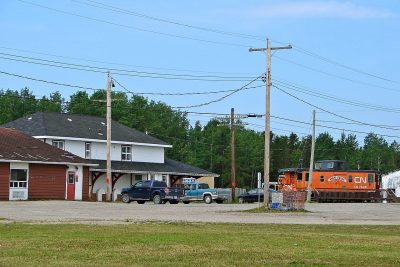
Heritage Railway Station · 1923–1924VIA Rail/Canadian National Railway Station, Nakina, Ontario110 Railway AvenuePhoto: P199 · CC BY-SA 3.0 · Commons file
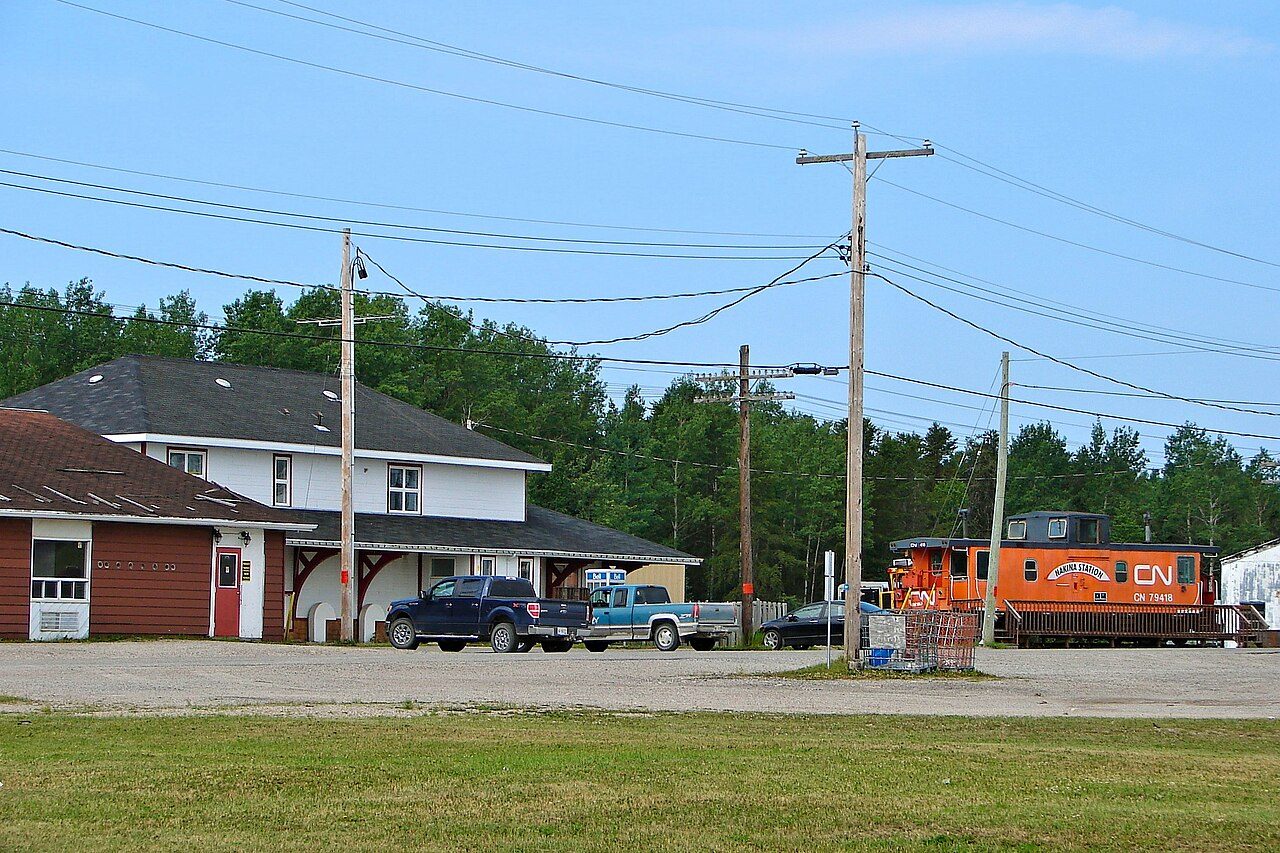 VIA Rail/Canadian National Railway Station, Nakina, Ontario · Photo: P199 · CC BY-SA 3.0
1historic place on the registers
History of Geraldton · Canada’s heritage registers
Before 1961: 39% of the homes in Geraldton
For Geraldton, that is 2.2 times the typical town’s share, 18%. Inside the town the registers count 1 historic place. That is 2.3 for every 10,000 people, a higher rate than 87% of Canadian towns. The one entry is VIA Rail/Canadian National Railway Station, Nakina, Ontario (1923), a heritage railway station.
Historic places
1
2.3 per 10,000 residents
Highest designations
0
National Historic Sites and Classified Federal Heritage Buildings
Other federal designations
1
Recognized buildings, railway stations, lighthouses
Oldest building
1923
the first construction date on its record
Homes built before 1961
39%
typical town: 18%
The map
Where Geraldton’s history is
Every place on the registers inside the town, by its designation.
Other federal designations
Names show on hover, and a tap takes you to the place’s page.
The 1, by tier
1 Other federal designations
The federal directory kept by Parks Canada supplies most of these places; provincial and municipal lists outside Québec aren’t open data, so only the ones Wikidata documents with an article appear.
Points from Wikidata (Parks Canada’s files carry none) and from Québec’s register, as mapped there.
Other federal designations
One more federal designation in Geraldton
Recognized Federal Heritage Buildings, heritage railway stations and lighthouses. Each one opens its own page.
Homes by age
Geraldton added few homes from 2016 to 2021: 1.3%, where most towns have 4.1%
Homes built from 1981 to 2000 make up just 16% of Geraldton’s, against 23% in the typical town. Few of Geraldton’s homes date from 2001 to 2015: 3.1%, the norm 15%. More of Geraldton’s homes were built from 1961 to 1980 than in any other period: 41%.
39%
Before 1961
41%
1961–80
16%
1981–2000
3.1%
2001–15
1.3%
2016–21
GeraldtonTypical town
2021 Census, private dwellings by period of construction (Statistics Canada); the typical town is the middle Canadian town of 2,500 or more.
Towns its size
Geraldton has the most of 16 towns its size
Towns of 4,400 to 4,400 residents, by places on the registers.
Geraldton1
The middle one has 0. For 15, the registers list nothing.
In brief
Geraldton in brief
Older stock first: 39% of homes in Geraldton were standing by 1961, against 18% in the typical town. There are 1 historic place in all. Among the 16 towns nearest its size, none has more historic places. Everything else is close to the norm: its designation dates from 1994.
How to read these numbers
What this data can and can’t tell you
- The federal register. Federal places come from Parks Canada’s directory, which counts National Historic Sites, federal heritage buildings, stations and lighthouses; their statements are the register’s own.
- People and events. Persons of national historic significance come with no location; a town gets one only by birthplace (name and both life years agreeing) or by one of its own places that bears the name and whose record tells the story. Events, which can’t be tied, are left out.
- Map points. Where a federal place sits on the map is Wikidata’s placing; the directory itself has no coordinates.
- The tiers. National Historic Sites and the most protected buildings form the top tier; recognized federal buildings, stations and lighthouses the second; provincial and municipal listings the third.
- Provincial and municipal lists. The local and provincial lists outside Québec aren’t published openly, so this page counts what Wikidata records and pages only the places an encyclopedia describes.
- Protection. A National Historic Site designation recognises significance; it doesn’t by itself protect a building the federal government doesn’t own. Legal protection comes from provincial and municipal designations, whose own registers aren’t open data outside Québec.
- The grade. History isn’t one of Canada’s graded pillars, so this page describes and compares without a letter.
Questions about Geraldton’s history
How old are the homes in Geraldton?
The 2021 Census dates 39% of its homes before 1961 (18% in the typical town).
How many historic places does Geraldton have on the registers?
Inside Geraldton: 1 historic place.
What is the oldest building in Geraldton?
By its record, VIA Rail/Canadian National Railway Station, Nakina, Ontario, from 1923 (Heritage Railway Station).
Contains information licensed under the Open Government Licence – Canada (Parks Canada).
Sources: Parks Canada, Directory of Federal Heritage Designations · Canadian Register of Historic Places (federal extract) · Wikidata (CC0) for map points, other names and articles · Statistics Canada, 2021 Census (homes by period of construction). Under the Statistics Canada Open Licence.
Adapted from Statistics Canada (Census of Population 2021, population estimates 2025, 2021 census boundaries) under the Statistics Canada Open Licence; this does not constitute an endorsement by Statistics Canada. Neighbourhood names in some cities © OpenStreetMap contributors (ODbL).