
Annapolis County, Subdivision DNova Scotia
It is a town of 3,273 residents in Nova Scotia. Statistics Canada places it in the Annapolis census division.
Is Annapolis County, Subdivision D a good place to live?
Health is a weak point (D). Jobs and pay trail most towns (D). Hazard risk is its strong suit (A−). The overall grade lands at D−, behind almost every Canadian town. That places it #86 of 88 in Nova Scotia.
This town's rent is the 2021 census rent scaled to 2025 by its province's ratio of surveyed to census rents: no rental survey covers it, so its Cost Grade is less sure. Safety is the police detachment's figure, shared with the towns and countryside around it. Crime here is counted against the people who live here, but many visitors or second-home owners add to it, so the rate per resident runs higher than residents' own risk. No School Grade: this province doesn't publish comparable results school by school. Health is graded on the health region's survey figures and life expectancy, with the distance to hospital giving the town its own spread.
How Annapolis County, Subdivision D grades
Each subject compares Annapolis County, Subdivision D with Canadian towns of 2,500 or more, ordered by how far it is from the middle. Towns in other countries are graded separately.
How TownRatings grades Canadian towns →
What makes Annapolis County, Subdivision D stand out
The 3 things Annapolis County, Subdivision D does most differently from other towns.
The data
Data highlights are ordered by what stands out in Annapolis County, Subdivision D.
Annapolis County, Subdivision D is graded a D for health
Smoking is commoner than in the province: 19% of adults, against 14% for Nova Scotia. In the health survey, 44% of adults in the region rated their health very good or excellent, below Nova Scotia’s towns (49%) and Canadian towns (52%) alike. Women in the region live to 82.5 and men to 77.6, 80.0 years taken together (2022/2024). What sets Annapolis County, Subdivision D apart within its region is a longer trip to hospital, 19 km for the average resident (3.7 km typical). For health survey and life expectancy, the only official count covers all of the Zone 1 - Western, Annapolis County, Subdivision D included.
Very good or excellent health · adults, age-standardised
| Health | Annapolis County, Subdivision D | Nova Scotia | Canada |
|---|---|---|---|
| Smokers | 19% | 15% | 12% |
| Very good or excellent health | 44% | 49% | 52% |
| Chronic conditions (average share) | 20% | 20% | 17% |
| Life expectancy at birth | 80.0 | 80.0 | 81.5 |
Statistics Canada, Canadian Community Health Survey 2023/2024 and life expectancy 2022/2024; Open Database of Healthcare Facilities
Annapolis County, Subdivision D has 0.1 jobs for every resident in work, so most leave town for work
The average trip to work took 27 min, higher than Nova Scotia’s towns (23 min) and near Canadian towns (26 min). The car carried 92% of commuters at the census.
How working residents got to work · census 2021
| Census 2021 | Annapolis County, Subdivision D | Nova Scotia | Canada |
|---|---|---|---|
| Average trip | 27 min | 23 min | 26 min |
| Car or van | 92% | 92% | 89% |
Statistics Canada, Census 2021 (labour and commuting) · These are May 2021 figures, gathered while COVID-19 kept many people home or out of work.
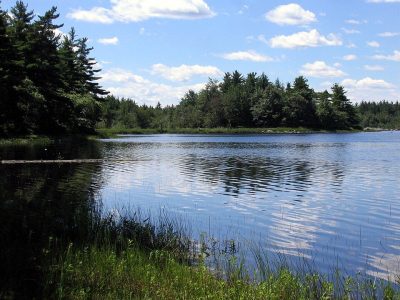
Step out of Annapolis County, Subdivision D and you are in Kejimkujik National Park and National Historic Site
Protected areas cover 25% of the land within 10 km; for the typical Canadian town it is 2.3%. Public parks and reserves within 10 km: 118, above both Nova Scotia’s towns (23.5) and Canadian towns (4). Within 5 km are 5 beaches; Kedge Beach is the nearest. 5 mapped walking routes pass within 2 km, among them the Grafton Woods Trail and Liberty Lake Loop.
Protected land · of the land within 10 km
| Outdoors | Annapolis County, Subdivision D | Nova Scotia | Canada |
|---|---|---|---|
| Protected land within 10 km | 25% | 8.7% | 2.3% |
| Public protected areas within 10 km | 118 | 23.5 | 4 |
Canadian Protected and Conserved Areas Database (CPCAD), OpenStreetMap routes and beaches
For the force that serves Annapolis County, Subdivision D, the Crime Severity Index is 96, above Nova Scotia’s towns and Canadian towns
The force’s area logs 19.8 violent incidents per 1,000 residents a year. For violence alone, its police area’s index was 108, higher than both Nova Scotia’s towns (94) and Canadian towns (86).
Year by year · Crime Severity Index for each year
| 2023–2025 | Annapolis County, Subdivision D | Nova Scotia | Canada |
|---|---|---|---|
| Crime Severity Index | 96 | 71 | 67 |
| Violent crime | 19.8 | 14.5 | 12 |
| Violent Crime Severity Index | 108 | 94 | 86 |
Statistics Canada, Uniform Crime Reporting Survey, 2023–2025 average · Data for Crime Severity Index, Violent Crime Severity Index, violent crime and property crime per 1,000 covers the Annapolis County detachment area
Flood mapping exists for Annapolis County, Subdivision D: 3 on record, latest by Province of Nova Scotia
Annapolis County, Subdivision D’s survey area, 5.6% over the radon guideline, is close to the typical town’s 6.6%. Shaking is about as much of a worry in Annapolis County, Subdivision D as in most places, at $0.027 a year per $1,000 of building value ($0.030 typical). Fire reaches the land around Annapolis County, Subdivision D now and then: 2.1% within 25 km since 1986 (0.05% a year), below the high band.
Radon tests above the guideline · share of tested homes, 200 Bq/m³
| Hazards | Annapolis County, Subdivision D | Nova Scotia | Canada |
|---|---|---|---|
| Radon tests above the guideline | 5.6% | 13% | 6.6% |
| Earthquake loss per $1,000 of buildings a year | $0.027 | $0.018 | $0.030 |
NRCan seismic risk model and burned areas, Health Canada radon survey, the Flood Hazard Map Inventory · Radon tests published for the Zone 2 health region, not by town
Of Annapolis County, Subdivision D’s 4 schools, one teaches in French
Young children have 18 km to the nearest elementary school, higher than both Nova Scotia’s towns (1.9 km) and Canadian towns (0.5 km). Its 3 km reach takes in 3 elementary schools and 1 school for every grade, all of Annapolis County, Subdivision D’s schooling.
| School | Level | Students | System |
|---|---|---|---|
| Annapolis East Elementary SchoolNearest elementary school, 0.6 kmElementary | Elementary | – | English public |
| École Rose-des-Vents FrenchNearest secondary school, 0.6 kmAll grades | All grades | – | French public |
Schools by system · Schools within 3 km
| Schools within 3 km | Annapolis County, Subdivision D | Nova Scotia | Canada |
|---|---|---|---|
| Nearest secondary school | 26 km | 4.3 km | 1.2 km |
| Nearest elementary school | 18 km | 1.9 km | 0.5 km |
| School boards | 2 | 1 | 3 |
Provincial school lists and results, 2025-26 · In Nova Scotia, no schools grade. The province reports its assessments by regional centre, and that series stops in 2019–20.
Summer runs warm in Annapolis County, Subdivision D: July highs of 26.2°C, above Nova Scotia’s towns and Canadian towns
Rain and snow peak in December, at 125 mm. A normal winter brings 268 cm of snow, above Nova Scotia’s towns (215 cm) and Canadian towns (141 cm) alike. January is the snowiest month, with 78 cm on average. Expect January lows of around −9.8°C in Annapolis County, Subdivision D.
Average high by season · ECCC normals, 1991–2020
| Normals, 1991–2020 | Annapolis County, Subdivision D | Nova Scotia | Canada |
|---|---|---|---|
| Snowfall a year | 268 cm | 215 cm | 141 cm |
| July afternoon high | 26.2°C | 23.1°C | 25.5°C |
| Precipitation a year | 1,137 mm | 1,393 mm | 883 mm |
| January night low | −9.8°C | −8.9°C | −13.5°C |
Environment and Climate Change Canada, Canadian Climate Normals 1991–2020 (Greenwood)
Fewer households are stretched by shelter costs in Annapolis County, Subdivision D: 7% spend 30%+ of income, against 18% in the typical Canadian town
Home ownership covers 88% of households. Rent took a fifth of household income, in line with Nova Scotia’s towns (21%) and Canadian towns (20%).
What homes were worth · The median owner’s estimate at the 2021 census
| Census 2021 | Annapolis County, Subdivision D | Nova Scotia | Canada |
|---|---|---|---|
| Households spending 30%+ on shelter | 7% | 13% | 18% |
| Households owning their home | 88% | 82% | 74% |
Statistics Canada, Census 2021; CMHC Rental Market Survey via Statistics Canada · These are 2021 census values, as owners judged them, set against household income in 2020.
A median age of 52: Annapolis County, Subdivision D is older than 90% of Canadian towns
1.6% of residents belong to a visible minority, below both Nova Scotia’s towns (4%) and Canadian towns (15%). The 65-and-over age group makes up nearly a quarter of residents. One measure of family life: 14% of residents are under 15.
Ages · Share of residents in each age group, Census 2021
Schooling · Highest qualification, residents 15 and over
Women and men · all residents
Women make up 49.8% of Annapolis County, Subdivision D
Of the 2021 count, 1,515 were women and 1,530 men (women across Canada: 50.9%).
| Annapolis County, Subdivision D | Nova Scotia | Canada | |
|---|---|---|---|
| Under 15 | 14% | 14% | 16% |
| 15 to 64 | 62% | 62% | 64% |
| 65+ | 24% | 25% | 19% |
| No certificate, diploma or degree | 25% | 18% | 16% |
| Postsecondary qualification | 45% | 54% | 56% |
Statistics Canada, Census 2021; Nova Scotia and Canada: medians of towns of 2,500+
A normal November in Annapolis County, Subdivision D runs from freezing to 9°C
At the extremes, July afternoons reach 26°C and January nights −10°C. December follows at 3°C by day and −6°C by night. Rain and snow over a typical November come to 120 mm. Snowfall in a normal November: 15 cm.
Normal highs, the months ahead · ECCC normals, 1991–2020
| Season | High | Low | Rain and snow |
|---|---|---|---|
| Winter | 1°C | −8°C | 316 mm |
| Spring | 11°C | 0°C | 251 mm |
| Summer | 25°C | 12°C | 237 mm |
| Autumn | 15°C | 4°C | 333 mm |
ECCC normals, 1991–2020 (Greenwood); the forecast is on the Weather page
Annapolis County, Subdivision D sends Chris d'Entremont (Liberal Party of Canada) to the Commons from Acadie—Annapolis
In the census’s list of municipalities, Annapolis County, Subdivision D is a subdivision of county municipality.
Wikidata, MAMH, MMAH, Statistics Canada
Annapolis County, Subdivision D has no public library of its own; the nearest is Dr. Frank W. Morse Memorial Library, 18 km away
The next is Bridgetown Branch, Annapolis Valley Regional Library (Annapolis County, Subdivision B), 23 km away.
Provincial library statistics, OpenStreetMap, the CRA and Statistics Canada
Heritage in Annapolis County, Subdivision D: 1 historic place of the highest rank
Homes from before 1961 make up 28% of the stock, about level with Nova Scotia’s towns (28%) and above Canadian towns (18%).
Historic places by designation · inside the town
Among them
| Heritage | Annapolis County, Subdivision D | Nova Scotia | Canada |
|---|---|---|---|
| Homes built before 1961 | 28% | 28% | 18% |
Canadian Register of Historic Places, Directory of Federal Heritage Designations, Québec’s Répertoire du patrimoine culturel, Wikidata; Census 2021 homes by period
Everything we know about Annapolis County, Subdivision D
Kejimkujik and 12 more in and around Annapolis County, Subdivision D
From museums to parks and historic sites: Annapolis County, Subdivision D’s places to visit and those just beyond its edge, most famous first.
 National park · Parks CanadaKejimkujikin townMuseumMuseumMiddleton Railway Museum1 km outside town, to the northwest · 2K visitors a year (2024)MuseumMuseumGreenwood Military Aviation Museum2.5 km outside town, to the northMuseumMuseumMacdonald Museum700 m outside town, to the northwestHistoric shipHistoric shipSilver Star (CT-133)2.5 km outside town, to the northHistoric shipHistoric shipArcturus (CP140A)2.4 km outside town, to the north
Photos: each place’s Wikidata image, from Wikimedia Commons under the licence below (our copy, resized).
Photo credits (1)
- Kejimkujik: Aconcagua, CC BY-SA 3.0, Wikimedia Commons
Famous people from Annapolis County, Subdivision D
4 notable people were born in Annapolis County, Subdivision D.
About Annapolis County, Subdivision D
Town in Nova Scotia
TownRatings follows Statistics Canada’s map: Annapolis County, Subdivision D is one municipality in Nova Scotia, figures and all.
Statistics Canada: population estimates 2025 (17-10-0155), Census of Population 2021, 2021 census boundaries.
- Population
- 3,273 (people, 2025 estimate)
- Province or territory
- Nova Scotia
- Census division
- Annapolis
- Census subdivision
- 1205001
Questions about Annapolis County, Subdivision D
Who are the people of Annapolis County, Subdivision D?
2% of residents belong to a visible minority, against 15% for the median of Canadian towns; 4% have an Indigenous identity and 5% are immigrants.
What kind of homes are in Annapolis County, Subdivision D?
Mostly 89% single-detached houses (the median of Canadian towns: 64%), with 0% of homes in buildings of five or more storeys. Households hold 2.2 people on average, and 27% have just one.
Is Annapolis County, Subdivision D growing?
Yes: the census counted 2,991 in 2016 and 3,049 in 2021, a rise of 1.9%, against 4.1% for the median of Canadian towns. The 2025 estimate is 3,273.
Is Annapolis County, Subdivision D a young town or an old one?
At 52, its median age compares with 45.2 across Canadian towns. Children make up 14% of the population and seniors 24%.
Sources: Statistics Canada, Census of Population 2021 · population estimates 2025 (17-10-0155) and 2021 census boundaries · Uniform Crime Reporting Survey 2023–25 (35-10-0026, 35-10-0183 to 35-10-0190) · CMHC rents as published by Statistics Canada (34-10-0133) · grades by TownRatings. Under the Statistics Canada Open Licence.
Adapted from Statistics Canada (Census of Population 2021, population estimates 2025, 2021 census boundaries) under the Statistics Canada Open Licence; this does not constitute an endorsement by Statistics Canada. Neighbourhood names in some cities © OpenStreetMap contributors (ODbL).