Photo: JA7957 at English Wikipedia · Public domain
0historic places on the registers
History of Saint-Antoine · Canada’s heritage registers
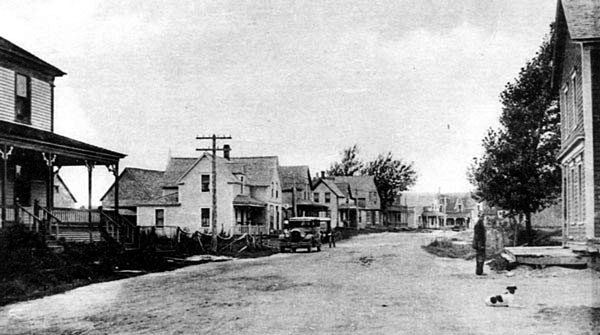
Pictures of old Saint-Antoine, 1930–1940: 3 in all
The nearest heritage to Saint-Antoine is Saint Lawrence Anglican Church, 12 km off, one of 5 places within 25 km. The closest top-tier heritage is in Moncton, 29 km from here.
Historic places within 25 km
5
0 of the highest designation
Nearest historic place
12 km
Saint Lawrence Anglican Church
Homes built before 1961
12%
typical town: 18%
Through time
Old Saint-Antoine, 1930 to 1940
Oldest first: 3 old photographs of the town. The dots mark each picture’s year; tap one to enlarge it.
1890190019101920193019401950Confederation to 1900Boom yearsThe wars and betweenAfter the war
Public domain or CC0, made before 1950, from Wikimedia Commons; old views of places can be drawings, prints or maps of their time. Each credit opens the image’s page.
How it began
Saint-Antoine on record since 1832
1832 is the date of Saint-Antoine’s municipality in Wikidata, and like many such dates it may record a charter, not the first homes. Saint-Antoine takes its name from Anthony the Great. Saint-Antoine got its name in 1873.
Nearest to Saint-Antoine: Saint Lawrence Anglican Church, 12 km away
Count to 25 km and there are 5. Their towns number 4: Bouctouche, Wellington and Dundas first. Among them are 3 provincial or municipal listings and 2 heritage lighthouses.
Little new building in Saint-Antoine: 1.3% of homes date from 2016 to 2021, against 4.1%
Count back from today and half of Saint-Antoine’s homes are older than 2001. Before 1961: just 12% of Saint-Antoine’s homes, where most towns have 18%. Saint-Antoine’s largest group of homes, 34%, went up from 1981 to 2000.
12%
Before 1961
29%
1961–80
34%
1981–2000
24%
2001–15
1.3%
2016–21
Saint-AntoineTypical town
2021 Census, private dwellings by period of construction (Statistics Canada); the typical town is the middle Canadian town of 2,500 or more.
Pre-1961 homes are a small part of its stock: 12%, against 18% in the typical town.
How to read these numbers
What this data can and can’t tell you
•
The tiers. Tiers follow the designation: national recognition and classement first, other federal designations next, provincial and local listings last.
•
People and events. Parks Canada’s open file gives its national historic persons no place. A town’s page names one only when the person was born there (matched by name and both life years) or one of its own historic places carries the name and its record speaks of them; national historic events stay off.
•
The federal register. Every federal designation is in Parks Canada’s directory, and the Canadian Register of Historic Places gives most of them a bilingual statement of significance.
•
The grade. There is no history grade: the page sets out the record and compares it with other towns.
•
Provincial and municipal lists. Only Wikidata gives open access to listings on provincial and municipal registers outside Québec; without an article such a place is counted but not paged.
•
Protection. National historic designation honours a place but binds only federal owners; a private building’s protection depends on its province or municipality.
Questions about Saint-Antoine’s history
How many historic places does Saint-Antoine have on the registers?
The registers have nothing inside Saint-Antoine; Saint Lawrence Anglican Church, in Bouctouche, is 12 km away.
How old are the homes in Saint-Antoine?
12% predate 1961, where the typical town has 18%.
Contains information licensed under the Open Government Licence – Canada (Parks Canada).
Sources: Parks Canada, Directory of Federal Heritage Designations · Canadian Register of Historic Places (federal extract) · Wikidata (CC0) for map points, other names and articles · Statistics Canada, 2021 Census (homes by period of construction). Under the Statistics Canada Open Licence.

 1930
 1940
 1940