History of Minnedosa · Canada’s heritage registers
Canada’s registers list 1 historic place in Minnedosa
Scaled to its population Minnedosa’s record is long: 3.5 per 10,000 residents, more than 91% of Canadian towns. Canadian Pacific Railway Station, Minnedosa, Manitoba, from 1910, is the town’s heritage railway station. Behind these stands one more local or provincial listing that only Wikidata records.
Public domain or CC0, made before 1950, from Wikimedia Commons; old views of places can be drawings, prints or maps of their time. Each credit opens the image’s page.
How it began
Minnedosa’s first recorded year: 1883
Minnedosa took its legal form as a town in 1883. As a municipality, Minnedosa carries the date March 2, 1883 on Wikidata: a founding, an incorporation or an amalgamation.
Every place on the registers inside the town, by its designation.
Other federal designations
Dots open their places’ pages; hover first to read the name.
The 1, by tier
1 Other federal designations
Federal designations come from Parks Canada’s directory; a province’s or a council’s own listing shows here only when Wikidata holds it and an encyclopedia covers it.
Points from Wikidata (Parks Canada’s files carry none) and from Québec’s register, as mapped there.
Other federal designations
One other place Canada recognizes in Minnedosa
Recognized Federal Heritage Buildings, heritage railway stations and lighthouses. Each one opens its own page.
4 places of the highest rank within 50 km of Minnedosa
Count to 50 km and there are 16. Nearest comes “Canadian National Railway Station, Neepawa, Manitoba”, 26 km off, in Neepawa. Harrison Park, Brandon and Neepawa hold most of them, among 5 towns.
Casa Loma, Building (A2)Recognized Federal Heritage Building · 1928–1930 · 47 km away, in Harrison Park
Homes by age
29% of Minnedosa’s homes are older than 1961, against a usual 18%
Homes built from 2016 to 2021 make up 5.4% of Minnedosa’s, above the typical 4.1%. The busiest building years in Minnedosa were from 1961 to 1980, which account for 42% of today’s homes. Minnedosa built little from 2001 to 2015: 8.3% of its homes, where most towns have 15%.
29%
Before 1961
42%
1961–80
16%
1981–2000
8.3%
2001–15
5.4%
2016–21
MinnedosaTypical town
2021 Census, private dwellings by period of construction (Statistics Canada); the typical town is the middle Canadian town of 2,500 or more.
Born here
6 Minnedosa births on record from before 1914
The earliest is Frances Gertrude McGill, born in 1877. Frances Gertrude McGill is the most written about, in 13 languages. Of them all, Frances Gertrude McGill lived longest: 82 years, until 1959. Grant Watson closes the list, born in 1905.
Frances Gertrude McGill
Kenny Blatchford
Harold Earl Roche
Colin Pearson, Baron Pearson
Ken Watson
Grant Watson
18501875190019251950
Frances Gertrude McGill1877–1959 · Canadian forensic pathologist
CP
Colin Pearson, Baron Pearson1899–1980 · British judge
KW
Ken Watson1904–1986 · Canadian curler
Kenny Blatchford1882–1933 · Canadian politician
HR
Harold Earl Roche1893–1961 · Canadian politician
GW
Grant Watson1905–1977 · Canadian curler
Everyone born in Minnedosa → Born before 1914 (the page’s periods: Confederation to the First World War). Birthplaces from Wikidata, each checked against the person’s Wikipedia article.
Towns its size
Minnedosa has the 1st most of 16 towns its size
Towns of 2,800 to 2,900 residents, by places on the registers.
Older stock first: 29% of homes in Minnedosa were standing by 1961, against 18% in the typical town. In all there are 1 historic place. Of the 16 towns closest in size, it has the most historic places. Among the lives from its past: Frances Gertrude McGill (1877), Colin Pearson, Baron Pearson (1899) and Ken Watson (1904). For the rest, its designation dates from 1992.
How to read these numbers
What this data can and can’t tell you
•
People and events. National historic persons carry no place in the open file. They appear on a town’s page when born there (same name, same birth and death years) or when a historic place inside it carries their name and its record names them with their dates; national historic events don’t appear.
•
Protection. Being on these registers doesn’t mean a building can’t change. Federal designation commemorates; protection is provincial or municipal, and those lists aren’t open here.
•
Provincial and municipal lists. Outside Québec, provinces’ and municipalities’ heritage registers aren’t open data; their places are known only through Wikidata items with a register number, and only those with an encyclopedia article get a page.
•
The federal register. The federal list is complete and open: Parks Canada’s directory for the designations, the Canadian Register of Historic Places for what each one is and why it matters.
•
The tiers. Three tiers: the top for National Historic Sites, classified federal buildings and Québec’s classements, a second for the other federal designations, a third for provincial and municipal listings.
•
Map points. Parks Canada publishes no coordinates, so federal places are pinned where Wikidata puts them.
•
The grade. History is described, not graded, for every Canadian town.
Questions about Minnedosa’s history
How many historic places does Minnedosa have on the registers?
1 historic place inside Minnedosa, by the federal, Québec and Wikidata-known registers.
What is the oldest building in Minnedosa?
Canadian Pacific Railway Station, Minnedosa, Manitoba — its record dates it to 1910 (Heritage Railway Station).
How old are the homes in Minnedosa?
The 2021 Census dates 29% of its homes before 1961 (18% in the typical town).
Why might a heritage building in Minnedosa be missing here?
Its province’s and council’s own lists can’t be reused here; one further listing in Minnedosa shows up only as a Wikidata number.
Contains information licensed under the Open Government Licence – Canada (Parks Canada).
Sources: Parks Canada, Directory of Federal Heritage Designations · Canadian Register of Historic Places (federal extract) · Wikidata (CC0) for map points, other names and articles · Statistics Canada, 2021 Census (homes by period of construction). Under the Statistics Canada Open Licence.

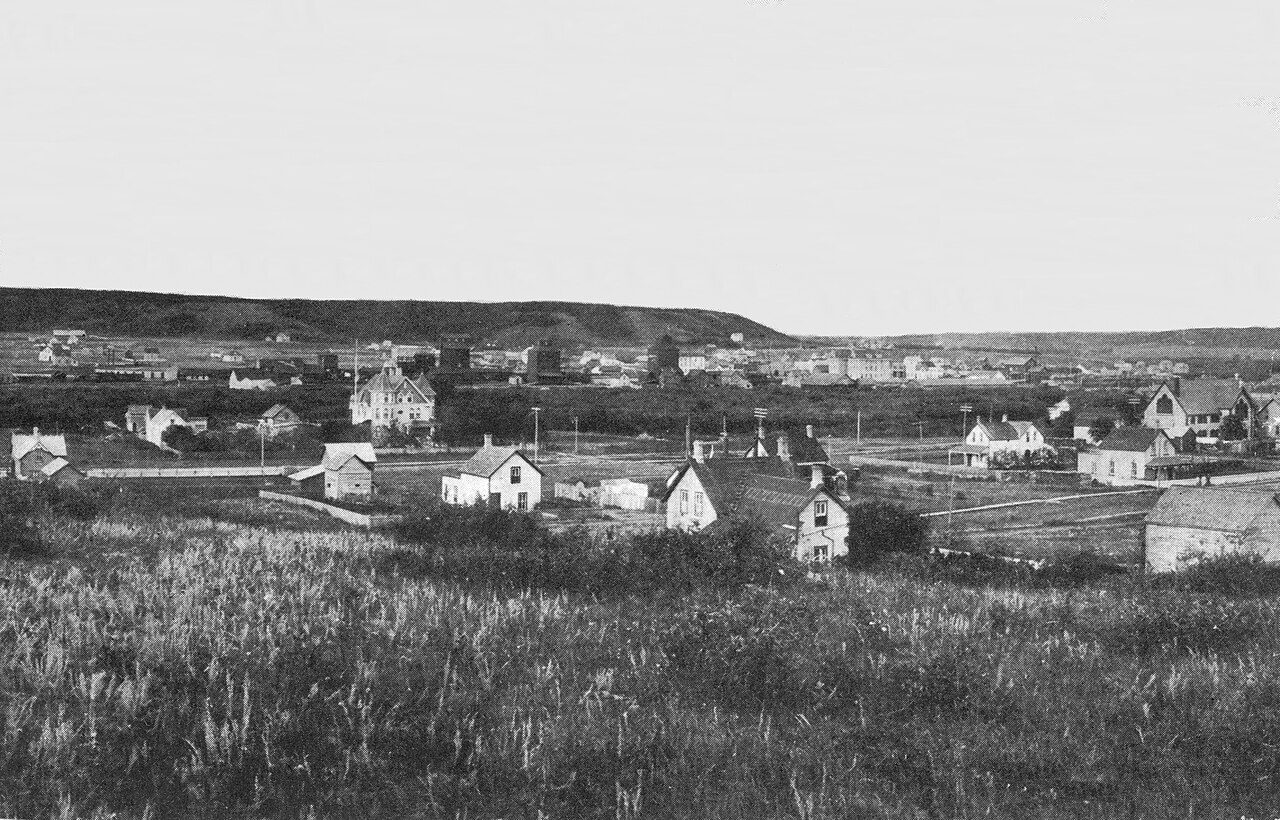 c. 1918

