Turlock’s post office opened in 1871, and 2 of its places are on the National Register
More historic than 44% of U.S. towns · #187 of 847 in California. What drives it
Most of Turlock was built recently: 6% of its homes predate 1940 and the median home dates from 1984. Its Register listings are the Turlock High School Auditorium and Gymnasium and the Turlock Carnegie Library. Below: 10 old photos and papers, maps from 1888 on, and the census since 1880.
Founding year: the first Turlock post office (Blevins & Helbock, CC0).The full story ↓
History grade
What drives Turlock’s History grade
On its age, its old homes and the National Register, Turlock is more historic than 44% of U.S. towns, #187 of 847 in California. Its National Register listings hold the grade up; its share of homes from before 1940 pulls it down.
C+
HistoryA character grade: shown, never part of Turlock’s overall grade.
Few California towns list much on the Register (a typical California town has 0.0 per 10,000 residents, the U.S. 2.4), so Turlock’s 0.4 sits above most of its state (70% of California towns have fewer) while its 3 historic buildings outnumber those of 65% of U.S. towns.
How sure. Graded on any two of the three inputs instead, the letter would range from C to B−. The pre-1940 share (±1.4 points) is firm at this size. The founding year is the first post office, not a stated founding date.
Founding year: the first post office (other dates in Quick answers). Homes: Census ACS 2020–24. National Register: National Park Service, May 2026 list; each listing counted once (boundary changes and added documentation belong to their listing), and a historic district counts its contributing buildings. How TownRatings grades history →
What stands out about Turlock’s past
Read from the archive, the National Register and the record. The page puts what stands out first.
Fire insurance maps drew every building, what it was made of and what it was used for, so insurers could price the risk of fire. Pick a year, then a sheet.
1888Sheet 1 of 1
Edition
Sheets
BrickWoodStone
Sanborn Map Company, via the Library of Congress. Editions published in 1930 or earlier, which are in the public domain.
Famous people
35 famous people were born in Turlock
Writers, athletes, leaders and more, ranked by how widely they’re known.
Founded on December 22, 1871, by prominent grain farmer John William Mitchell, the town consisted of a post office, a depot, a grain warehouse and a few other buildings. Mitchell declined the honor of having the town named for himself. The name "Turlock" was then chosen instead. The name is believed to originate from the Irish village of Turlough. In October 1870, Harper's Weekly published an excerpt from English novelist James Payn's story Bred in the Bone, which includes the mention of a town named "Turlock". Local historians believe that the issue of Harper's Weekly was read by early resident H.W. Lander, who suggested the alternate name.
Passages that mention Turlock, cut from the printed page as they were published.
History of Stanislaus County California1921 · page 1265Read the page →
Read the text
In July, 1918, a new corporation, the First National Bank at Turlock, organized and owned by the stockholders of the Commercial Bank of Turlock, was opened, taking over the commercial business of the Commercial Bank of Turlock. The charter for the Commercial Bank of Turlock was retained, however, for the use of the savings department and the two branches of the Commercial Bank of Turlock, which had been established at Denair in 1912 and at Hilmar in August, 1916.
Text read by machine from the scan; it may contain errors.
History of Stanislaus County California1921 · page 447Read the page →
Read the text
Turlock with his brothers, he bought out the warehouse business of the Merced Milling Company at Turlock, then located on the present site of the Southern Pacific depot, and continued under the firm name of Knutsen Bros, for three years. Dissolving partnership, he purchased his present site on the State Highway two blocks south of the center of Turlock, and built the large warehouse, 60x90 feet, with a floor capacity of 8,000 square feet, and another warehouse with a capacity of 2,000 square feet. He also leases a still larger warehouse with concrete floors three blocks west of the first, which has a floor capacity of 12,000 square feet. His warehouses are equipped
Text read by machine from the scan; it may contain errors.
Scans and text from the Internet Archive. Books published in 1930 or earlier, which are in the public domain.
Timeline
Turlock, 1871 to 2001
Woven from the archive, old maps, post office records, the National Register and the people born here.
Nothing in the archives for these yearsWeddings on Main Street, storms, parades, school pictures, the old store. If it’s in your family album, it belongs here.
The Turlock post office opened in 1871, the earliest record of the town by name (U.S. post office records).
How does Turlock rank for history?
Turlock is more historic than 44% of U.S. towns, #187 of 847 in California. The History grade combines the town’s founding era, the share of homes built before 1940 and its National Register listings. It’s a character grade, so it isn’t part of the overall grade. How it works.
What is on the National Register in Turlock?
Two places: the Turlock High School Auditorium and Gymnasium (listed 1991) and the Turlock Carnegie Library (1993).
How old are the homes in Turlock?
6% of Turlock’s homes were built before 1940 (Census estimate, ±1.4 points), against a typical 3.4% for a California town; the median home was built in 1984.
Founding dates: Wikidata, Wikipedia, the U.S. post office records of Blevins & Helbock (CC0) and the Census. Homes by year built: Census ACS 2020–24. National Register of Historic Places: National Park Service (list of May 22, 2026). Old photos, postcards and papers: Wikimedia Commons, the Library of Congress and other public archives, credited on each item’s page. Maps: U.S. Geological Survey historical topographic maps (via Esri) and Sanborn fire-insurance maps (Library of Congress). History text and census tables: Wikipedia (CC BY-SA 4.0). Places that used to be: USGS Geographic Names Information System (2021).
From the Library of Congress (10), Wikidata (1), the National Register of Historic Places (2), Wikipedia, Wikidata and Wikipedia for famous people, U.S. Geological Survey historical maps, U.S. Census counts (via Wikipedia), the US Post Offices dataset (Blevins & Helbock), the USGS Geographic Names Information System, Sanborn fire insurance maps (Library of Congress) and old county and town histories (Internet Archive). Archive images are copied here with their credits and licenses, shown on each photo’s page. Refreshed monthly.


 1942
 1942
 1942
 1942
 1942
 1942
 1942
 1942
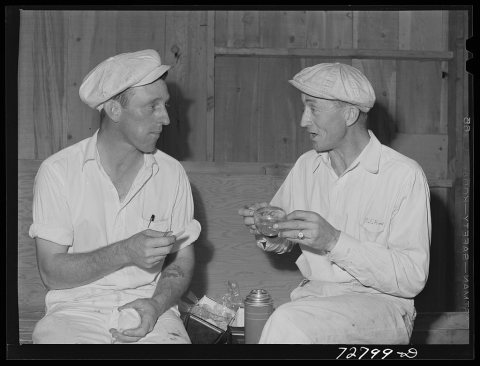 1942
