More historic than 26% of U.S. towns · #379 of 847 in California. What drives it
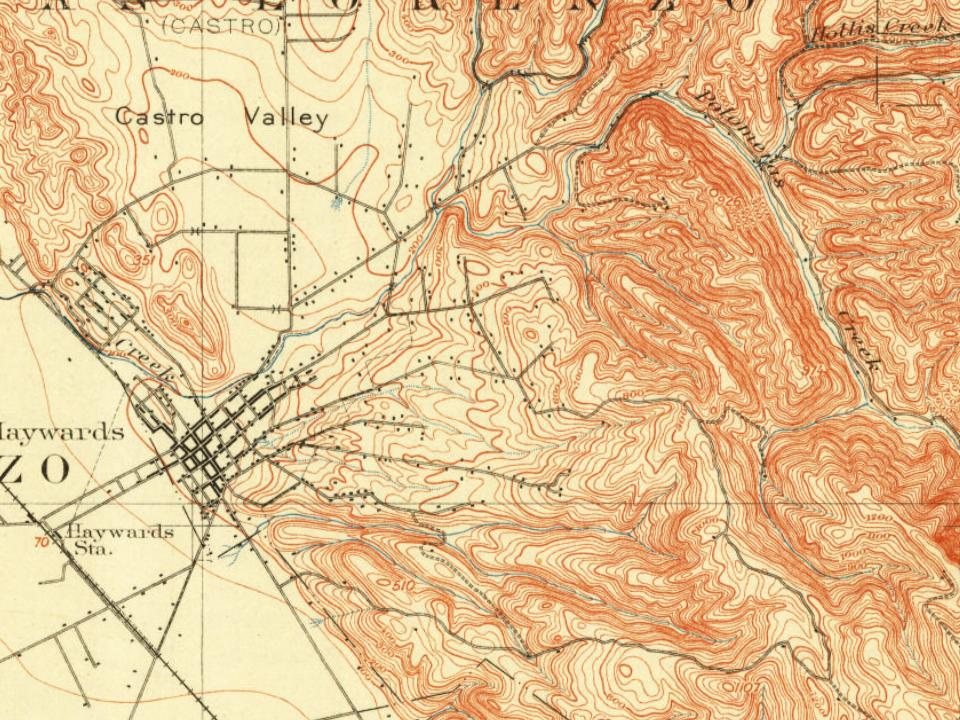
Most of Fairview was built recently: 8% of its homes predate 1940 and the median home dates from 1975. Below: maps from 1899 on and the census since 1990.
On its age, its old homes and the National Register, Fairview is more historic than 26% of U.S. towns, #379 of 847 in California. Its share of homes from before 1940 holds the grade up; its National Register listings pull it down.
C
HistoryA character grade: shown, never part of Fairview’s overall grade.
Few California towns list much on the Register (a typical California town has 0.0 per 10,000 residents, the U.S. 2.4), so Fairview’s 0.0 sits below most of its state (31% of California towns have fewer) while its 0 listings outnumber those of 23% of U.S. towns.
How sure. Graded on two of the three inputs, so a change in either one moves the letter more than it would with three. The pre-1940 share is a Census survey estimate (±5.1 points).
Founding year: our sources. Homes: Census ACS 2020–24. National Register: National Park Service, May 2026 list; each listing counted once (boundary changes and added documentation belong to their listing), and a historic district counts its contributing buildings. How TownRatings grades history →
What stands out about Fairview’s past
Read from the archive, the National Register and the record. The page puts what stands out first.
The hills that now form Fairview were part of the homeland of the Ohlone people, specifically the Chochenyo-speaking Muwekma band, who maintained villages and seasonal camps throughout the East Bay.
In 1843, the land was included in the Rancho San Lorenzo, a Mexican land grant awarded to Guillermo (William) Castro. The rancho extended over what are now Hayward, Castro Valley, San Lorenzo, and the surrounding hills, including Fairview. Following the American annexation of California, legal disputes and financial pressures forced Castro to sell off much of the rancho during the 1850s and 1860s, opening the area to American and European settlers.
Fairview is more historic than 26% of U.S. towns, #379 of 847 in California. The History grade combines the town’s founding era, the share of homes built before 1940 and its National Register listings. It’s a character grade, so it isn’t part of the overall grade. How it works.
How old are the homes in Fairview?
8% of Fairview’s homes were built before 1940 (Census estimate, ±5.1 points), against a typical 3.4% for a California town; the median home was built in 1975.
Founding dates: Wikidata, Wikipedia, the U.S. post office records of Blevins & Helbock (CC0) and the Census. Homes by year built: Census ACS 2020–24. National Register of Historic Places: National Park Service (list of May 22, 2026). Old photos, postcards and papers: Wikimedia Commons, the Library of Congress and other public archives, credited on each item’s page. Maps: U.S. Geological Survey historical topographic maps (via Esri) and Sanborn fire-insurance maps (Library of Congress). History text and census tables: Wikipedia (CC BY-SA 4.0). Places that used to be: USGS Geographic Names Information System (2021).
From Wikimedia Commons (6), Wikipedia, U.S. Geological Survey historical maps, U.S. Census counts (via Wikipedia) and the USGS Geographic Names Information System. Archive images are copied here with their credits and licenses, shown on each photo’s page. Refreshed monthly.



 2026
 2022
 2014
 2014
 2011
 2011