189 years in pictures
The archive holds 5 old photos and papers going back to 2015.
1 place on the National Register of Historic Places.
- 1837Cedar Bluff is settled
Each edition grades its towns against each other only.

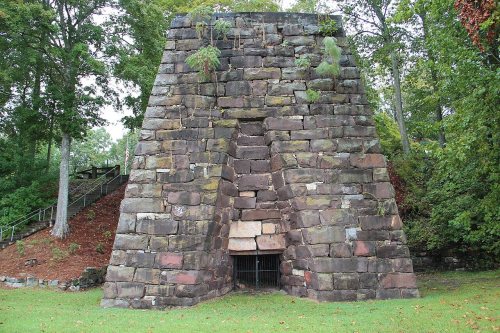
The best of Cedar Bluff’s subject grades is an A− for cost of living; the weakest is a D− for incomes. 29% of residents live below the poverty line in Cedar Bluff, where Alabama’s towns sit at 16% and U.S. towns at 9.6%. Residents are less healthy than 95% of U.S. towns on CDC estimates. Only 2 of the 139 Alabama towns we compare have a lower property crime rate than Cedar Bluff. Cedar Bluff's civic life (library use, community groups, volunteering) trails 88% of U.S. towns. Cornwall Furnace is on the National Register of Historic Places. Cedar Bluff has fewer than 2,500 residents, so it gets subject grades but no overall grade.
Where Cedar Bluff beats most towns, and one thing worth knowing.
Cornwall FurnaceWhere Cedar Bluff’s working residents go each day. Line width shows the share.
Census LEHD 2023
Each subject compared with towns across the country (schools within Alabama), ordered by how far Cedar Bluff is from typical.
How TownRatings grades towns →
The archive holds 5 old photos and papers going back to 2015.
1 place on the National Register of Historic Places.
Who provides power, water and the rest in Cedar Bluff, and how to reach them.
EPA SDWIS (Oct 9, 2026) · HIFLD + EIA-861 2025 · Census 2020 ZCTAs · NCES 2024–25 · registration: vote.gov, updated Nov 18, 2024.
Ordered by what stands out in Cedar Bluff.
18% of Cedar Bluff adults have diabetes, above both Alabama’s towns (15%) and U.S. towns (12%). 19% of adults report frequent physical distress in Cedar Bluff. Cedar Bluff beats the Alabama average on 1 of 32 CDC measures and trails it on 14.
| Cedar Bluff | Alabama towns | U.S. towns | |
|---|---|---|---|
| Diabetes (CDC PLACES) | 18% | 15% | 12% |
| Frequent physical distress (CDC PLACES) | 19% | 15% | 14% |
| High blood pressure (CDC PLACES) | 48% | 43% | 35% |
| Fair or poor health (CDC PLACES) | 30% | 24% | 19% |
| What stands out | Cedar Bluff | AL |
|---|---|---|
| More adults treating high blood pressure | 81.4% | 78% |
| More adults with COPD | 12.7% | 8% |
CDC PLACES 2025 · modeled estimates for adults · CMS · HRSA
Its public schools are run by the Cherokee County school district. Its one school is below. The largest public high school is Cedar Bluff High School, with 623 students.
| School | Level | Students | Letter |
|---|---|---|---|
| Cedar Bluff High SchoolLargest public high schoolGrades PK–12 | Grades PK–12 | 623 | B+ |
NCES · EDFacts · graded within AL on state tests and graduation
Expected storm and flood damage is higher than in 82% of U.S. communities.
FEMA National Risk Index · OpenFEMA
Most working residents leave Cedar Bluff for work: only 2% work in town. Since 2013, Cedar Bluff has added 33 jobs, to 227 in 2023. Cedar Bluff’s median household income is $53,000.
| Cedar Bluff | Alabama towns | U.S. towns | |
|---|---|---|---|
| Working residents who work in town | 2.4% | 10% | 8% |
| Median household income | $53,000 | $62,000 | $80,000 |
| Average trip to work | 24 minutes | 25 minutes | 25 minutes |
Census LEHD 2023 · ACS
Cedar Bluff has mild winters and warm summers, with plenty of rain. The July high in Cedar Bluff is 90°F.
NOAA U.S. Climate Normals, 1991–2020
Zillow Home Value Index · Redfin Data Center
FBI crime data, 2025 · crimes reported to police
None within 15 miles of Cedar Bluff; the nearest are
About 2 of every 100 Cedar Bluff residents are enrolled in college, against 6 across Alabama.
Town in Alabama, United States
Cedar Bluff is a town in Cherokee County, Alabama, United States. At the 2020 census, the population was 1,845. Unlike the rest of the county, Cedar Bluff is a wet town. Cedar Bluff is located on the north shore of Weiss Lake, noted for its crappie fishing.
From Wikipedia, licensed CC BY-SA 4.0 · facts via Wikidata (CC0)
Short answers, built from the data on this page.
Not for the area. Cost of living, which also weighs rents, property taxes and how many households pay 30% or more of their income for housing, grades A−.